

A Road Trip Along Tenerife’s East Coast
A pilgrimage town, mysterious pyramids, a ghost village and a spectacular rock arch — this day trip from Candelaria via the pyramids of Güímar to the Arco de Tajao combines nature and culture.
- Plenty of photo spots
- Culture
- Fish restaurants
- Optional: hiking
- Optional: beach
What Awaits You on Tenerife’s East Coast
Tenerife has many different faces: the lush green north and the rugged west. The sunny south with its large resort hotels and long beaches. The mystical Anaga Mountains in the northeast. The volcanic heart of the island and the cultural centre around Santa Cruz. Often overlooked, however, is the stretch of coastline between Santa Cruz and Tenerife South Airport. And unfairly so: here you’ll discover a fascinating mix of history, archaeology and nature. This road trip takes you to completely different places — all within a single day.
The Route
If you start from Villa ARTE in Garachico, the route takes you southeast via the TF-5 and TF-1 motorways. In total, you’ll spend around three hours driving throughout the day — divided into several short stages.
We recommend following the route from north to south, as described here. This way, you’ll experience the cultural highlights in the morning, enjoy lunch in Tajao, and discover the natural attractions in the afternoon. If you like, you can end the day at the beach in El Médano or make a detour to the ghost village of Abades on your way back to Garachico.

Füge hier deinen Tooltip-Text hinzu
Füge hier deinen Tooltip-Text hinzu
Füge hier deinen Tooltip-Text hinzu
The east coast is sunnier and drier than Tenerife’s north — making this road trip the perfect choice when low clouds hang over Garachico. By the time you return in the evening, the clouds have usually disappeared, and a beautiful sunset awaits you on our panoramic rooftop terrace.
Stop 1: Candelaria – The Island’s Religious Heart
Driving time from Garachico: approx. 1 hour
The first stop on this road trip is one of the most important Catholic pilgrimage sites in the Canary Islands. Candelaria, a peaceful coastal town, is home to the basilica dedicated to the patron saint of the archipelago — the Virgen de la Candelaria. Even from afar, you can spot the 45-metre-high bell tower rising majestically above the Atlantic Ocean.
The Basílica de Nuestra Señora de la Candelaria is a three-aisled church built in neoclassical style, crowned by a 25-metre-high dome. Inside, you’ll find the statue of the “Black Madonna” — although the original figure was swept away by a storm in the 19th century. According to legend, Guanche shepherds discovered a Madonna figure on the beach in the 14th century, possibly washed ashore from a shipwreck. Miracles were attributed to the statue, and the Guanches worshipped it in a cave long before the Spanish conquest introduced Christianity to the island.
Almost as impressive as the basilica itself are the nine larger-than-life bronze statues on the Plaza de la Patrona de Canarias. They represent the Menceyes — the Guanche kings who once ruled Tenerife.
After visiting the basilica, it’s worth taking a stroll along the promenade and through the small pedestrian streets of the town.


Candelaria
Basílica de Candelaria


Candelaria
Virgen de Candelaria


Candelaria
Mencey
Stop 2: The Pyramids of Güímar – Tenerife’s Mysterious Enigma
Driving time from Candelaria: approx. 15 minutes
Just a few kilometres south of Candelaria lies the ethnographic park Pirámides de Güímar. Six stepped pyramids built from lava stone continue to puzzle researchers and divide scientific opinion to this day.
Until the 1990s, the pyramids were largely dismissed as simple “piles of stones”. That changed when Norwegian adventurer and anthropologist Thor Heyerdahl — famous for crossing the Pacific on his raft Kon-Tiki — became interested in them. Heyerdahl noticed similarities between these structures and pyramids in Mexico, Peru and Egypt, leading him to speculate about possible transoceanic cultural connections long before Columbus. In 1998, he founded the ethnographic park to protect the pyramids from planned development. Whether the seven-step structures were built by the Guanches, by later farmers, or perhaps even represent a link between ancient civilisations remains unresolved to this day.
The park covers more than 64,000 square metres and includes:
- A pyramid complex with six stepped pyramids aligned with the summer and winter solstices
- A museum dedicated to Thor Heyerdahl’s expeditions and his theories about ancient civilisations
- A volcanic cave where archaeological remains of the Guanches were discovered
- A botanical garden featuring endemic Canary Island plants
- A poison garden with more than 70 toxic plant species from around the world
- A sustainable garden developed together with the University of La Laguna, recreating a typical Canary ravine ecosystem


Pyramiden von Güímar


Pyramiden von Güímar


Pyramiden von Güímar
Tip: Every year on June 21st, the Pyramids of Güímar offer the chance to witness a rare astronomical phenomenon: a double sunset. The sun disappears behind a mountain, briefly reappears, and only then finally sets.
Stop 3: San Miguel de Tajao – Eat Fish Like the Locals
Driving time from Güímar: approx. 25 minutes
Now it’s time for San Miguel de Tajao — a sleepy fishing village on Tenerife’s southeast coast where locals from across the island come for fresh seafood. The village is home to around eleven fish restaurants, and many of them barely even need menus. Fresh fish and seafood are displayed on ice at the counter, where you simply choose what you’d like to eat. The catch is weighed and then freshly prepared for you — grilled, fried or deep-fried. Typical side dishes include papas arrugadas with mojo sauce, salad and bread.
Particularly popular are the small fried squid (chopitos), fresh prawns and grilled wreckfish. There are several excellent restaurants here, but one of the best known is Marisquería Agua y Sal.
At weekends, Tajao can get busy — it sometimes feels as if half of Santa Cruz comes here for lunch. During the week, however, the atmosphere is much more relaxed.
Stop 4: Arco de Tajao – Tenerife’s Giant Rock Arch
Driving time from Tajao: approx. 3 minutes
After lunch, another natural highlight awaits you: the Arco de Tajao, a spectacular natural rock arch around 30 metres long and 10 metres high. This striking formation was created from volcanic tuff stone. Over thousands of years, wind and water eroded the softer rock layers and sculpted this impressive stone bridge.
There are two ways to reach the arch:
Option 1 (short) – From the Tajao motorway exit, turn left towards La Jaca after about 100 metres. In the first large left-hand bend, a small path branches off to the right (approx. 50 metres) leading directly to the arch. Parking is available along the roadside.
Option 2 (long) – Walk directly from the harbour promenade in Tajao to the arch. The trail follows bright tuff cliffs along the coast, passing bizarre rock formations and a barren yet fascinating volcanic landscape. This route is also known as the Ecomuseo de la Piedra and features information panels about the geology and history of the region. The walk is around 4 kilometres long and relatively easy.
Best Photo Spot
Most visitors approach the arch from above via the parking area. However, the more spectacular perspective opens up when you walk down beneath the arch itself.


Arco de Tajao


Arco de Tajao


Arco de Tajao
Still not ready to end the day after visiting the Arco de Tajao? There are several great ways to extend your road trip.
Option #1: The Ghost Town of Abades
Driving time from Arco de Tajao: approx. 5 minutes
The ghost town of Abades is one of Tenerife’s most unusual lost places. High above the sea, construction began in 1943 on an entire settlement known as the Sanatorio de Abona — a leper colony designed for around 200 patients on the island. Plans included an impressive Franco-style church with a large concrete cross visible from afar, a hospital, a crematorium and numerous residential buildings. But before the complex could be completed, leprosy was brought under control with new medication on the Canary Islands, and the facility never opened.
For decades, the Spanish military used the abandoned site as a training ground for urban combat exercises. In 2002, the area was sold to an Italian investor — but since then, nothing has happened. The buildings still stand today, overgrown and covered in colourful graffiti that has transformed the abandoned walls into a kind of open-air gallery. The site is freely accessible.
Option #2: El Médano – Tenerife’s Surf Beach
Driving time from Arco de Tajao: approx. 12 minutes
What better way to end the day than at the beach? Continue a few more kilometres south and you’ll arrive in El Médano — Tenerife’s surfing capital. The name translates as “the sand dune,” and the town is considered one of the top windsurfing and kitesurfing spots in the Canary Islands.
The lively promenade is perfect for a relaxed stroll, with colourful kites dancing above the ocean on one side and cosy cafés and bars on the other. Playa de El Médano itself stretches for more than a kilometre with bright, fine sand — one of the island’s few truly light sandy beaches. Grab a seat at one of the beachfront cafés, watch the kitesurfers glide across the water and end the day with a cold beer or a Barraquito, the famous Canarian layered coffee with milk and liqueur.
Option #3: Malpaís de Güímar
Driving time from Arco de Tajao: approx. 16 minutes
For those who enjoy hiking — or if you skipped one of the earlier stops — the Malpaís de Güímar is well worth a visit. This protected natural area stretches from the volcanic cone of Montaña Grande all the way down to the coast, creating a dramatic lava landscape. The word malpaís literally means “bad land” — a name once used by farmers for terrain too rugged and rocky to cultivate. The ancient lava flows, estimated to be around 5,000 years old, have formed bizarre, almost sculptural rock formations. Between them grow bright green Canary Island spurges and dense tabaiba shrubs, while more than 60 species of lichen cover the dark volcanic stone. Along the coastline, the Atlantic has carved spectacular shapes into the lava rock.
The circular hiking route starts and ends in Puertito de Güímar and follows the clearly marked trail Malpaís de Güímar 1. The path first leads along the lava coast past old salt pans, then climbs to the viewpoint Mirador de Montaña La Mar with sweeping views over the entire reserve and the Atlantic Ocean, before returning past reddish volcanic cones to the starting point. The shorter version of the hike is around 6.5 kilometres long with approximately 125 metres of elevation gain — an easy to moderate walk taking between two and three hours depending on your pace and photo stops. Information panels along the trail explain the geology, plant life and history of the region.


Malpaís de Güímar


El Médano


Geisterstadt Abades
Looking for a well-located place to stay for your Tenerife holiday? Discover Villa ARTE in Garachico!
Five Exclusive Apartments
Instead of anonymous hotel resorts, the five apartments at Villa ARTE offer the perfect combination of comfort and the charm of a historic building. Villa ARTE is located right in the heart of Garachico, just a few steps from the natural lava pools of El Caletón on one side and the historic old town on the other. One of the highlights is the spacious panoramic rooftop terrace overlooking the Atlantic Ocean and the rooftops of Garachico.
Garachico is an ideal base for exploring Tenerife. The small town offers everything you need for a relaxing holiday — while remaining peaceful, authentic and full of atmosphere, far away from mass tourism and party resorts.

- Sustainable, healthy construction
- Spacious layout
- Fully equipped kitchen
- Separate drinking water tap – no need to carry plastic bottles
- Many restaurants within walking distance
- The most personalised booking service
- Early-bird benefits
- Welcome basket with organic products
- Private guided tour of Garachico
- Loyalty bonus for returning guests
Enjoy the benefits of booking direct
When you book directly with Villa ARTE, you benefit from exclusive advantages that make planning your holiday easier and your stay even more enjoyable.

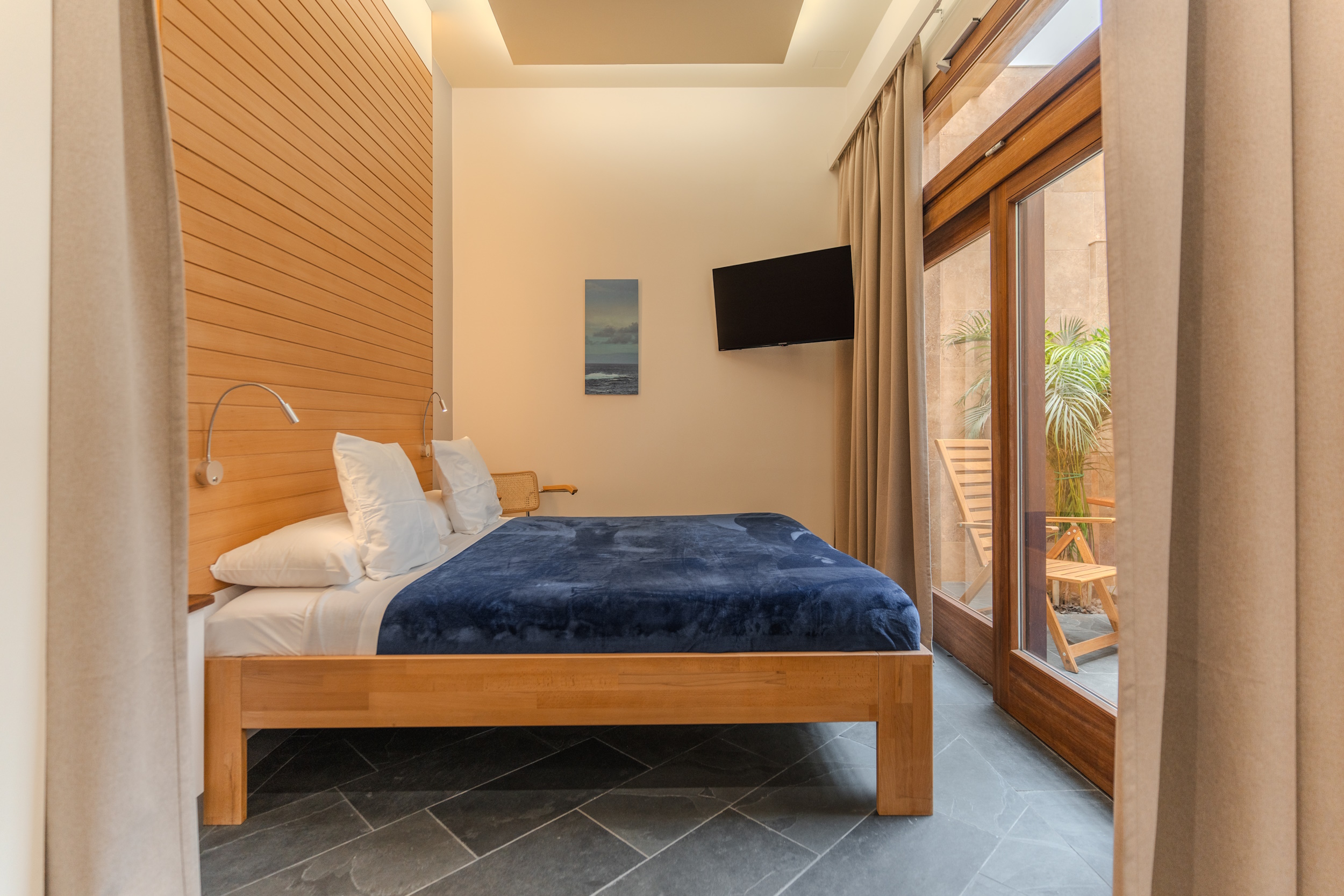
Suite Azul
- Size: 44 m²
- Floor: Ground floor
- Guests: ~2
- Outdoor: Patio


Apartamento Amarillo
- SIze: 59 m²
- Floor: 1st
- Guests: ~4
- Outdoor: Balcony
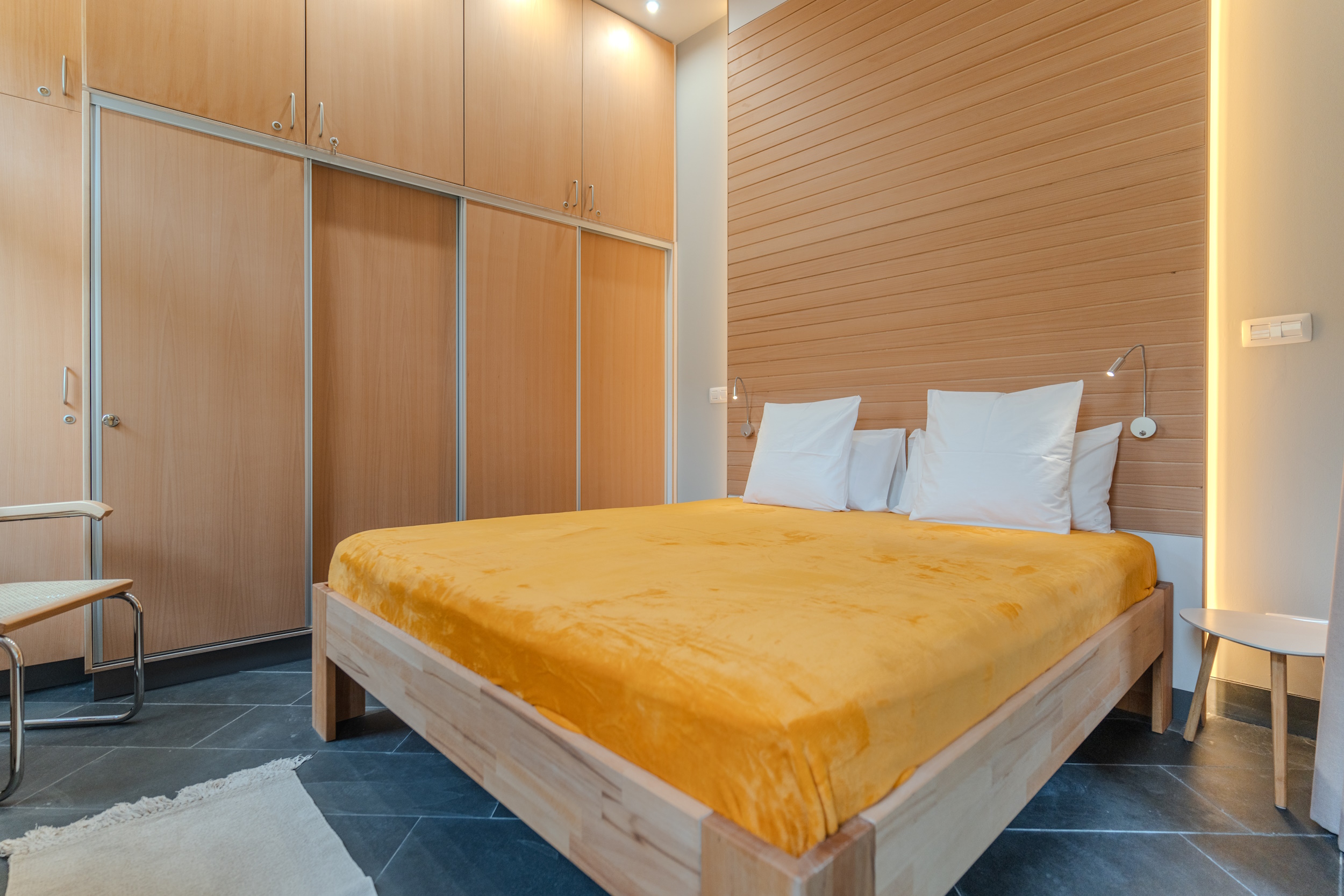
Ático Exclusivo
- Size: 60 m²
- Floor: 1st
- Guests: ~4
- Outdoor: 2 Terraces